

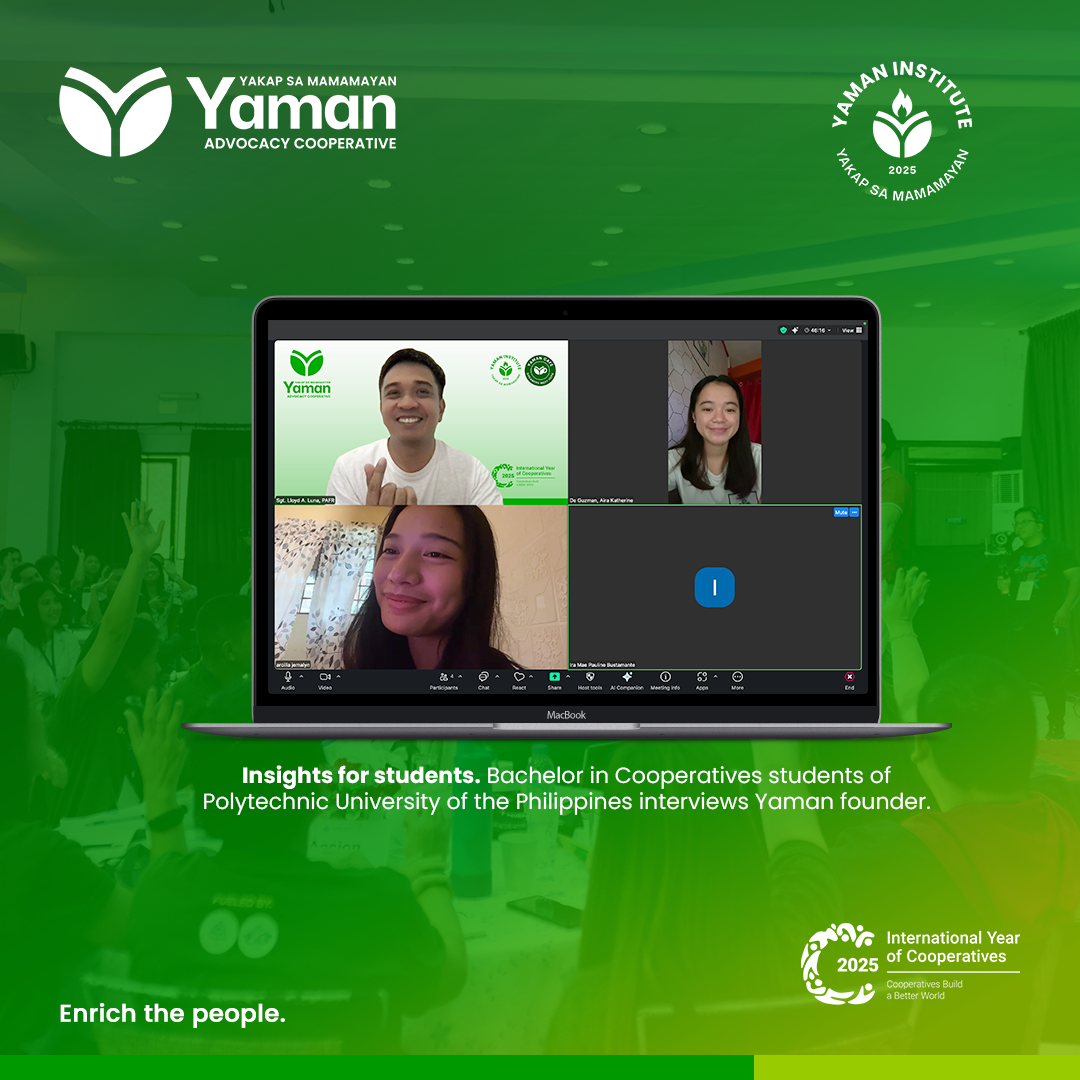
The meeting focused on an interview with Asian Filipino motivational speaker Lloyd Luna, popularly known as #PambansangInspirasyon, about a newly established cooperative that provides free training and education services for poverty alleviation through knowledge sharing and skill development. The discussion covered the cooperative’s governance structure, programs, and challenges, including the need to introduce the concept of an advocacy cooperative and differentiate it from traditional cooperatives. The conversation concluded with insights into the cooperative’s operational strategies, future plans for service expansion, and the impact of various economic and policy changes on cooperative operations.
Cooperative’s Training and Education Initiatives
Ira Guzman from the Polytechnic University of the Philippines conducted an interview with Lloyd Luna to gather insights into the cooperative’s background, governance practices, and future plans. The cooperative was established last year with the primary purpose of poverty alleviation through free training and education. The cooperative’s name and logo symbolize partnership and the sharing of knowledge. The main services provided by the cooperative include free training and education to address the issue of expensive training and lack of resources for education.
Advocacy Cooperative for Professional Development
The cooperative is structured as a flat organization with a democratic governance model focused on poverty alleviation through knowledge sharing and skill development. While they do not seek awards, the cooperative was established as the first advocacy cooperative for professional speakers, trainers, and subject matter experts, aiming to promote advocacy work collectively rather than individually. Despite being new, the organization maintains a non-political culture and avoids internal conflicts, though there are concerns about potential challenges as it grows.
Cooperative Member Support Programs
The discussion focused on the implementation of programs by a cooperative to support its members. The main initiatives included financial wellness forums to teach members about money management and public speaking training with scholarships for members interested in developing communication skills. The programs aimed to address the challenges faced by members in the cleaning industry, where many earn commission-based incomes and struggle with financial planning.
Advocacy Cooperative Challenges and Potential
The discussion focused on the challenges faced by a newly established cooperative, which lacks internal systems and policies due to its nascent stage. Sgt. explained that the main challenge is introducing the concept of an advocacy cooperative, which is not commonly recognized in the NCR region, and differentiating it from traditional cooperatives. They emphasized the need to communicate the cooperative’s unique financial model and proposition, which aims to provide education while ensuring members contribute financially. Despite these challenges, Sgt. expressed excitement about the potential of the cooperative as a game-changer in the industry.
Cooperative Training and Membership Challenges
Sgt discussed how their cooperative can provide services and training to other cooperatives, including leadership, management, and communication training for board members and staff. Arcilla asked about internal factors affecting the cooperative’s performance, to which Sgt responded that scheduling conflicts with speakers’ external engagements and member recruitment were key challenges. The cooperative originally had 15 members but faced difficulties in maintaining consistent membership.
Cooperative’s Strategic Change Challenges
The discussion focused on challenges faced by a cooperative in responding to community needs and implementing strategic changes. Sgt. explained that while the cooperative has many potential models to follow, they are taking a cautious approach by encouraging members to adjust to the cooperative’s systems rather than adjusting the cooperative to meet individual needs. The cooperative aims to enable members through financial education, confidence building, and skill development, rather than making major adjustments to their approach.
Cost-Effective Training Strategies
Sgt discussed strategies to strengthen the cooperative, including targeting decision-makers in companies and offering cost-effective training solutions. They highlighted that companies spend around 5,312 pesos per year per employee on training, while their cooperative can provide similar training for 500 pesos annually. Sgt also mentioned targeting professionals for continuing professional development units at a fraction of the cost, aiming to attract a large membership base in the next few years.
Cooperative Booking App Development
The discussion focused on the cooperative’s operations and challenges. Sgt explained their plans to develop a booking app for speakers, where members can book experts in various fields for training sessions, with the cooperative retaining 30% of the fees which are distributed among members as dividends. Sgt also discussed how economic, social, and policy changes impact cooperatives, highlighting the challenges of compliance with government requirements and the high costs involved in registering and maintaining a cooperative. The conversation concluded with Sgt sharing his background in engineering and his recent transition to working with cooperatives, emphasizing the cooperative model’s focus on wealth distribution and the need to acquire wealth through members’ talents.

Leave a Reply